Course Description
Compressed gas cylinders are common on construction sites, but improper handling can lead to serious injuries or even explosions. In this Compressed Gas Cylinders in Construction Environments course, you’ll learn how to store, move, and use gas cylinders safely, how to identify hazards, and what to do if a leak or accident occurs.
This course covers the hazards of high-pressure containers, how to read cylinder labels, and how to avoid dangerous mistakes during setup and use. You’ll learn safe storage practices, including how to separate flammable gases from oxidizers and why cylinders must be secured at all times.
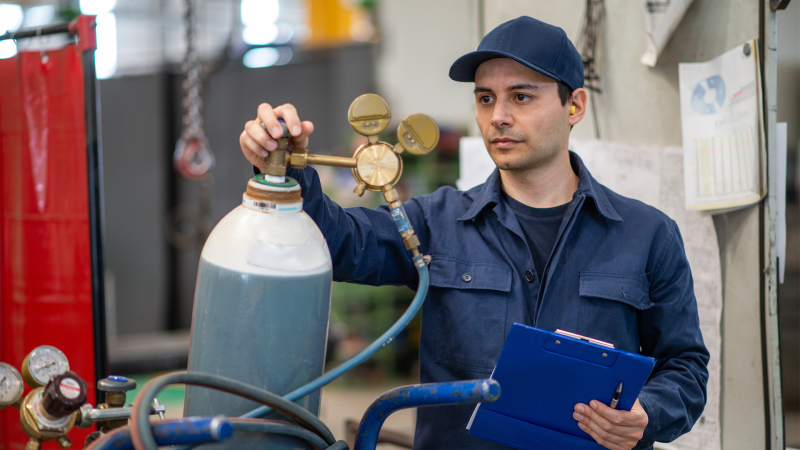
You’ll also understand how different gases are stored, what PPE to wear for cryogenic materials, and how to test for leaks using simple tools. The course explains the roles of regulators, CGA fittings, and pressure relief devices, and why forcing connections can lead to failure. Whether you're transporting a cylinder, checking for damage, or responding to a leak, these skills help keep your jobsite safe.
Learning Objectives:
- Identify the hazards associated with compressed gas cylinders
- Explain how to read and use cylinder labels and safety data sheets
- Apply safe procedures for transporting, storing, and securing cylinders
- Describe how to test for leaks and respond to gas release emergencies
- Recognize the purpose of regulators, fittings, and pressure relief devices
Skills You Will Learn
- Industrial Gases
- Leak-Down Tester
- Safety Mechanisms
- Core Domestic Gas Safety (CCN1)
- Frostbite
What You'll Learn
- Identify the hazards associated with compressed gas cylinders and the high-pressure containers and gases they contain
- Read and use cylinder labels and safety data sheets
- Apply safe procedures for transporting, storing, and securing cylinders, including separating flammable gases from oxidizers
- Test for leaks using simple tools and respond to gas release emergencies
- Recognize the purpose of regulators, CGA fittings, and pressure relief devices
- Select the proper PPE to wear when handling cryogenic materials
Key Takeaways
- Improper handling of compressed gas cylinders on construction sites can lead to serious injuries or even explosions.
- Cylinders must be secured at all times, and flammable gases must be separated from oxidizers during storage.
- Reading cylinder labels and safety data sheets is essential for handling gases safely.
- Forcing connections between regulators, CGA fittings, and pressure relief devices can lead to failure.
- Cryogenic materials require appropriate PPE to protect against hazards such as frostbite.
Frequently Asked Questions
Who is this course for?
It is designed for people who work with compressed gas cylinders in construction environments, including those transporting cylinders, checking for damage, or responding to leaks.
What topics does this course cover?
It covers the hazards of high-pressure containers, types of gases and their cylinders, reading cylinder labels, safe storage and handling, installing cylinders, finding and dealing with leaks, and the roles of regulators, CGA fittings, and pressure relief devices.
What skills will I gain?
You will learn to store, move, and use gas cylinders safely, identify hazards, read cylinder labels and safety data sheets, test for leaks using simple tools, and respond if a leak or accident occurs.
How is the course structured?
The course is organized into lessons covering types of gases and their cylinders, hazards, storing cylinders, handling cylinders safely, installing cylinders, finding and dealing with leaks, and a review.
Does the course address cryogenic materials?
Yes, it explains how different gases are stored and what PPE to wear when handling cryogenic materials.