Course Description
Hazardous materials can be found on nearly every construction site, and knowing what you're working with is key to staying safe. In this GHS Container Labels in Construction Environments course, you’ll learn how container labels help identify chemical hazards, what the symbols and text mean, and how to use this information to protect yourself and others on the job.
This course explains how OSHA’s Hazard Communication Standard and the Globally Harmonized System (GHS) work together to standardize container labeling.
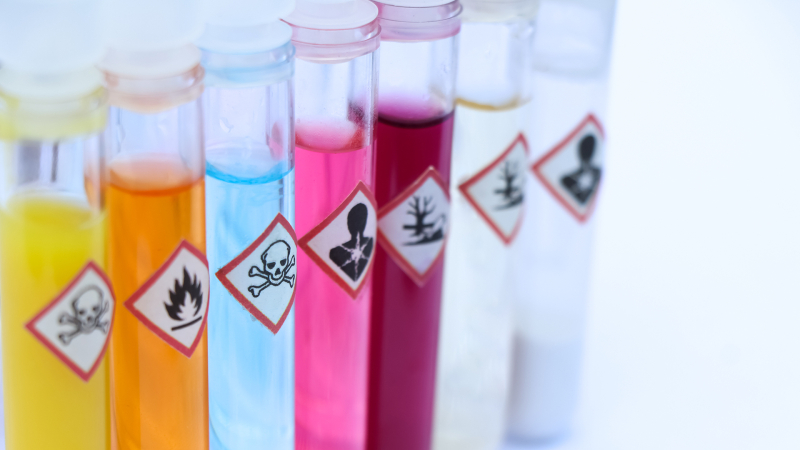
You’ll learn how to recognize the nine hazard pictograms, understand signal words and hazard statements, and apply precautionary instructions. The course also covers how to find important details about the material and its supplier—information that’s essential in emergencies. By the end, you’ll be able to quickly read GHS labels and take appropriate steps to prevent accidents and injuries.
Learning Objectives:
- Identify the purpose of GHS container labels under the HAZCOM standard
- Recognize the nine GHS hazard pictograms and what they represent
- Explain the function of signal words, hazard statements, and precautionary details
- Describe how to use label information for safe handling and storage
- Locate supplier and emergency contact details on a GHS-compliant label
Skills You Will Learn
- Chemical Safety
- Emergency Preparedness
- Hazard Communication (HazCom)
- Hazard Communication Standard (HCS)
- Workplace Safety
What You'll Learn
- Identify the purpose of GHS container labels under OSHA's Hazard Communication Standard (HAZCOM)
- Recognize the nine GHS hazard pictograms and what each one represents
- Explain the function of signal words, hazard statements, and precautionary details on a label
- Apply label information to handle and store chemicals safely on a construction site
- Locate supplier and emergency contact details on a GHS-compliant label
Key Takeaways
- OSHA's Hazard Communication Standard and the Globally Harmonized System (GHS) work together to standardize container labeling.
- GHS container labels help identify chemical hazards through standardized symbols and text.
- A GHS label uses nine hazard pictograms, signal words, hazard statements, and precautionary instructions to communicate risks.
- Labels also provide details about the material and its supplier that are essential in emergencies.
- Reading GHS labels quickly enables workers to take appropriate steps to prevent accidents and injuries on construction sites.
Frequently Asked Questions
Who is this course for?
It is for people working on construction sites, where hazardous materials can be found on nearly every site, who need to identify chemical hazards and stay safe.
What does this course cover?
It covers how container labels identify chemical hazards, what the symbols and text mean, how OSHA's Hazard Communication Standard and the GHS standardize labeling, the nine hazard pictograms, signal words, hazard statements, precautionary instructions, and how to find material and supplier details.
What skills will I gain?
The course builds skills in Chemical Safety, Emergency Preparedness, Hazard Communication (HazCom), the Hazard Communication Standard (HCS), and Workplace Safety.
What will I be able to do by the end of the course?
By the end, you will be able to quickly read GHS labels and take appropriate steps to prevent accidents and injuries.
What topics are included in the lessons?
Lessons cover GHS Container Labels in Construction Environments, The Goals of Hazard Communication, The Benefits of the GHS System, GHS Pictograms, Text Elements of GHS Labels, and a Review.